
Ocean surface temperatures
By Rick Thoman
Alaska Climate Specialist
Alaska Center for Climate Assessment and Preparedness
International Arctic Research Center/University of Alaska Fairbanks
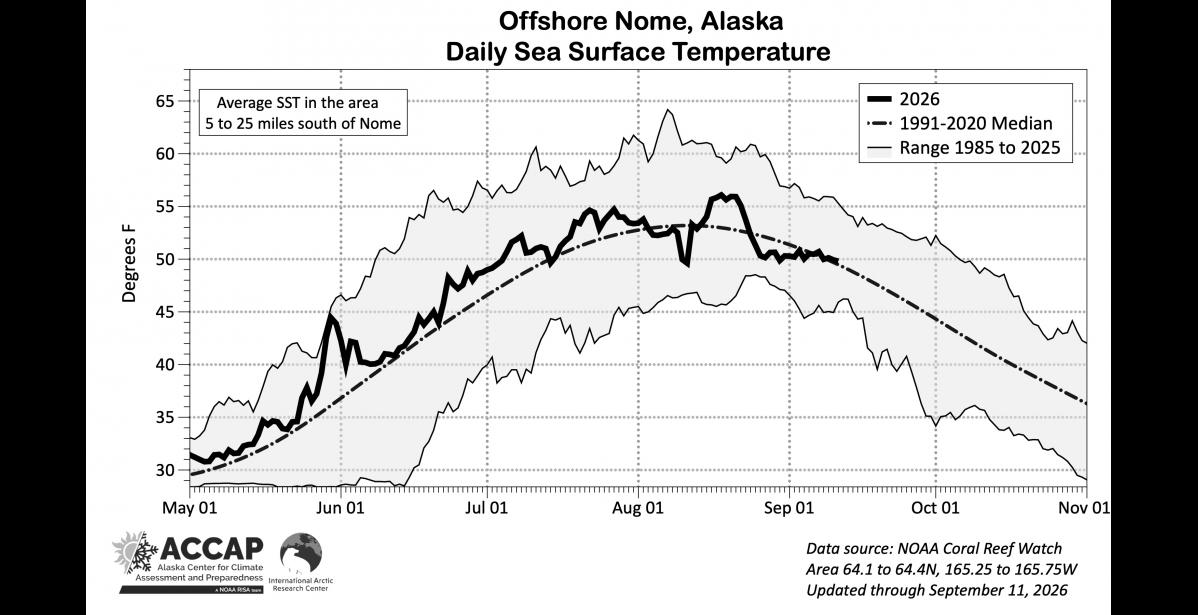
Northern Bering Sea ocean surface temperatures this summer have generally not been too far from normal based on the ultra-high resolution satellite-based NOAA Coral Reef Watch data. It's call “Coral Reef Watch” because that was the original use of this data but it's a global sea surface temperature data set, so it is able to provide us with the most detailed look at ocean surface temperatures.
This week's Climate Watch graphic shows daily sea surface temperatures offshore of Nome since May 1. Through July, ocean temperatures were persistently a little above normal the 30-year average except for several days in late May, when a pulse of warmer water from the Yukon River delta pushed temperatures close to record high levels (for late May). With the stormier weather since early August, sea surface temperatures have been cooler than normal at times, though for the August average sea surface temperature, it was exactly normal.
Ocean temperatures in the first half of September have the least variation of anytime during the open water season. The rapidly decreasing solar heating means that even a stretch of sunny weather is not able to boast temperatures, but air temperatures are not usually cool enough to support sustained cooling of the ocean. That's in the process of changing as we move toward October and air temperatures much cooler than the ocean surface become more frequent.