
American Pipit––Tougher than they look
American pipits are delicate-looking songbirds that defy their appearance to buck strong winds and endure the harsh condition of their alpine breeding grounds. This slender, fairy-like bird nests in one of our most exposed habitats.
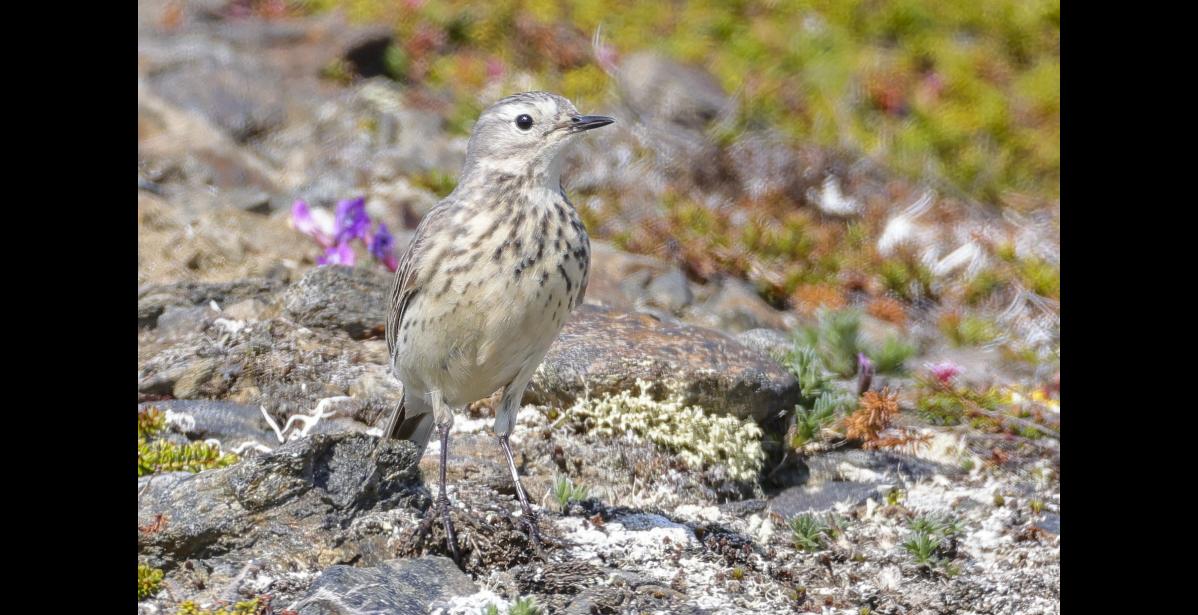
The American pipit breeds in arctic tundra from western Alaska to Greenland, and in alpine tundra on scattered mountaintops in the Rocky Mountain west, the high Sierras and the White Mountains in the northeastern United States.
During migration pipits are seen throughout North America en route to wintering areas in open habitats across the southern United States to central Mexico.
On the Seward Peninsula the pipit is a fairly common and widespread breeder at higher elevations in upland tundra and rocky slopes, and in some areas of dry tundra closer to the coast. They occur in the highlands of all the major offshore islands.
To nest successfully in such an exposed environment, pipits select sites with features such as rocks, tussocks, erosion or clumps of tundra that shelter their nests from wind and weather. Nest sites must be snow-free early in the season, but lingering snowfields nearby are a bonus—insects collect on the snow where they are easy to see and capture.
Pipits typically arrive from early to mid-May to select nest sites. Most nesting begins in early June but can be earlier if their nesting habitat is snow-free.
Some breeders arrive already in pairs, but many pairs are formed on the breeding grounds.
Typical of many songbirds, males use song and aerial displays to establish their territories and attract a mate. The male’s performance typically opens on the ground in song. He then launches 100 feet or more into the air, gliding down in an arc with a fanned, cocked tail, and wings spread while serenading potential mates or rivals with his lengthy, repetitive, high-pitched song.
Males are territorial and frequent chases and clashes may erupt between neighboring males early in the season.
The female clears a nest cavity on the ground in a concealed, sheltered spot. She builds a grass nest, while her mate may contribute some nesting material. Unlike pipits in most other areas that use only grass, on the Seward Peninsula pipits often line their nests with ptarmigan feathers. Given this year’s abundance of ptarmigan, I can imagine some very luxurious nests!
The female incubates four to seven eggs for about 14 days. Her mate brings her food, which she leaves the nest to receive, fluttering her wings to be fed.
Initially the female broods the naked hatchlings. The chicks stay in the nest for about 14 days, during which time both parents feed them. Fledglings are fed by the parents for about 14 days, after which they become independent and the family disperses.
Spring snowstorms may cause pipits to move to lower elevations and postpone or abandon nesting. But these are hardy birds. In a Wyoming study area, 17 American pipit nests were buried for 24 hours by a spring snowstorm. All nestlings 11 days old or older survived, as did some of the younger chicks.
During the breeding season pipits eat almost exclusively spiders and insects, including flies, beetles, caterpillars, moths and butterflies. During migration, if along the coast, small crustaceans and marine worms are eaten. In fall and winter seeds may make up almost half of their diet.
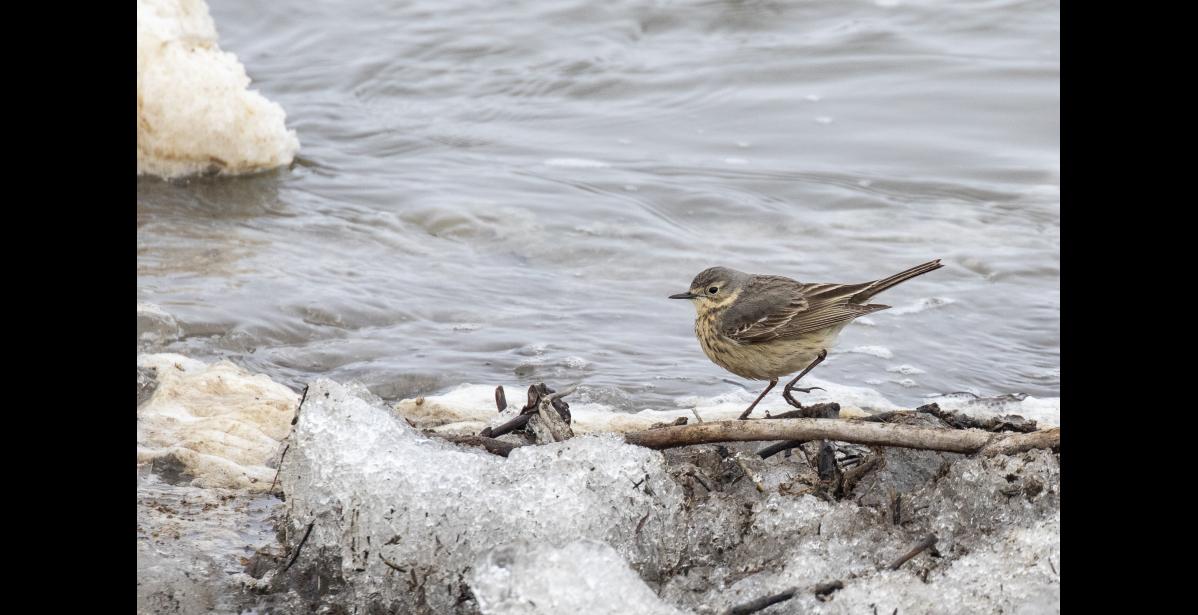
Pipits forage busily on the ground, walking briskly, or strutting while scanning for insects. They make sudden changes in direction while searching and may run to quickly snatch insects from the ground or vegetation.
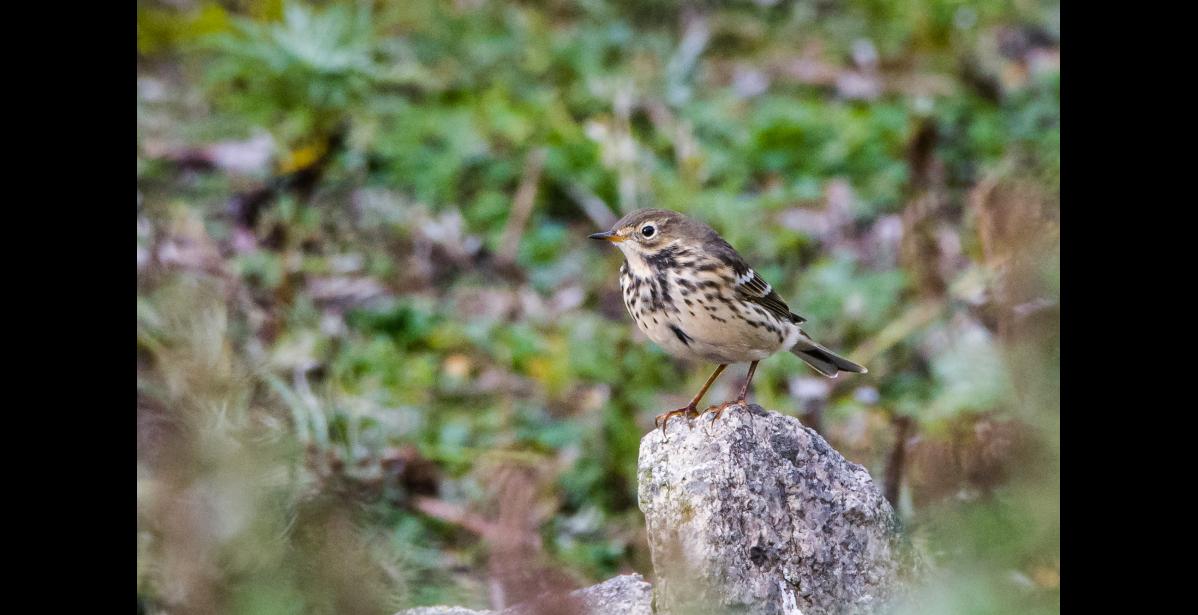
They will perch on rocks or low shrubs to survey for prey and make short flights to catch flying insects on the wing. I have often seen them foraging for insects on river ice during spring break-up and on snowfields in the mountains during the breeding season.
Like longspurs, pipits have a long hind toe and toenail. This is thought to help them when foraging on snow and mudflats. I wonder, too, if the long claw helps them cling to the tundra when foraging in often blustery mountaintop winds.
By the end of July, pipits begin leaving their alpine breeding areas to feed at lower elevations. Flocks of foraging pipits can be seen along river bars, roadsides, pond margins and coastal beaches. Fall migration continues through August and by the end of the month most have left for wintering areas in the western United States and Mexico.
Growing up, I knew this bird as a “water pipit,” and sometimes I still slip up and use that old name. In 1989, the water pipit, which occurred across most of the northern hemisphere, was split into three distinct species due to differences in genetics, vocalizations and behavior. The North American pipits were named American pipits.
In 2024, a Siberian subspecies of the American pipit was split off into its own species, the Siberian pipit. On rare occasions, this Asian species is seen on the western Seward Peninsula and on St. Lawrence Island.
The American pipit population is estimated to have declined by about 30 percent since 1970, but the species is still widespread and common.
As climate change fuels the expansion of shrubs into arctic tundra in the north and into alpine tundra at higher elevations, the breeding habitat for tundra nesting birds such as the pipit will continue to shrink.
Click here to hear the flight song of a male American pipit.