
Two Bering Strait children taken to Carlisle boarding school over a century ago return home
Over 120 years ago, two Alaska Native children from the Bering Strait region were taken to the Carlisle Indian Industrial School, a notorious boarding school. Both died of tuberculosis and were buried there. Now, over a century later, they have come home.
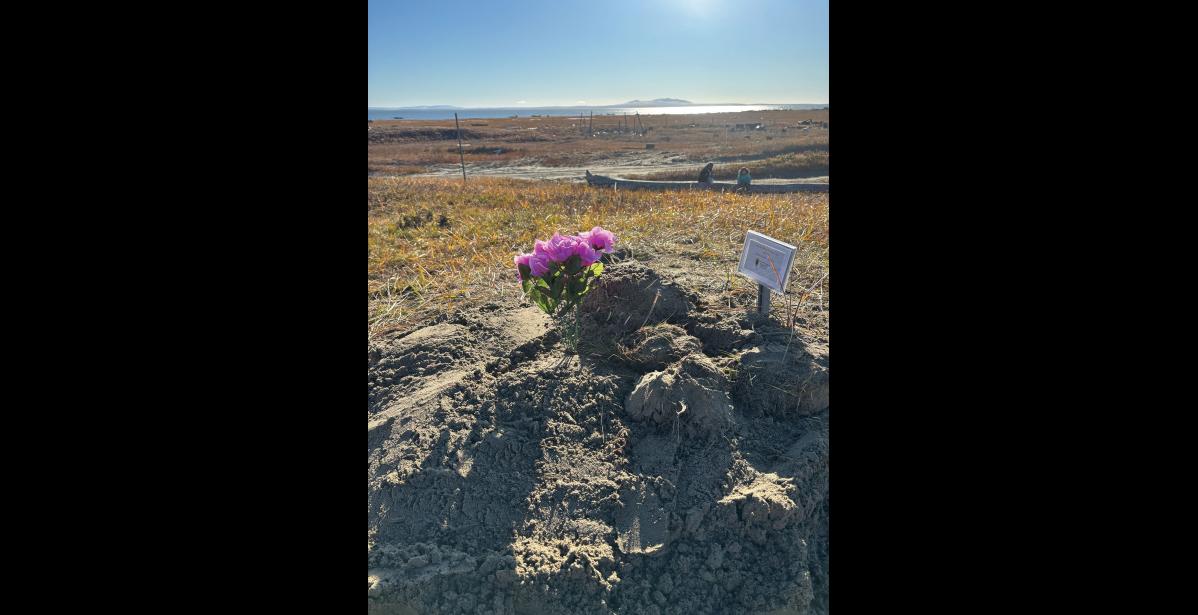
One child, a girl named Tummassak, originally from Shishmaref, arrived at Carlisle on November 14, 1897. She died April 8, 1900. Another, Edward Angalook of Unalakleet, arrived November 23, 1903 and died September 24, 1905. Last week, the remains of both children were brought to their home communities.
The graveyard at Carlisle was moved in 1927. Nearly a century later, in 2024, the Office of the Army Cemeteries, which runs the Carlisle Barracks Post Cemetery where the children were buried, reached out to the Alaska Native Heritage Center, according to reporting by Sydney Dauphinais at KBRD community radio in Ketchikan. The Alaska Native Heritage Center had conducted research on boarding schools and were asked to help identify the family members and origins of the Alaska Native students who died at Carlisle.
Nyché Andrew, an indigenous research specialist with Alaska Native Heritage Center, was one of the researchers working on the project. While looking at a photo of one child, 12-year-old Tummassak, who was taken from Teller Reindeer Station, she was struck by the similarity of Tummassak to Andrew’s own great-great grandmother, Mary Agugaq Avessuk. “I was very shocked, a little bit confused because of how strikingly similar they were, and also very perplexed by their similar tavluġun tattoos,” she said.
Tummassak was from Shishmaref, but taken from the Teller Reindeer Station, by Dr. Sheldon Jackson. Several families from Shishmaref were taken from Shishmaref to the reindeer station, and it is likely that is how Tummassak ended up in Teller. “The fact of the matter is, we don't have concrete lists of who went and when and how they went from Shishmaref to Teller. We just know there was a lot of Shishmaref relatives taken to Teller,” said Andrew.
An account published April 13, 1900 from Carlisle’s weekly school paper, The Indian Helper, reveals details about Tummassak. “We are grieved to record the death of another of our Alaska pupils—Tomicock,” it says. (Tummassak is spelled Tomicock, here.)
“She was patient, gentle and brave. She bore her illness in silence. Her smile was ready even when too weak to talk,” it reads.
It took a while for Andrew to be sure of the familial connection to Tummassak. She was very careful about presenting her research, both to her boss at the Alaska Native Heritage Center and to the Office of Army Cemeteries. “These ways of identifying family are very cultural, and it's very easy to doubt yourself on whether or not this holds up to Western research practices,” she said.
There’s an irony there, too. “You had to kind of know some cultural background in order to bring a student back who went to an institution whose job was to erase that cultural background,” said Andrew.
Part of the hesitancy is that Andrew is not sure precisely where Tummassak falls into the family tree, just that she is from Shishmaref. “I don't know her exact relation to my family, and that's just something that boarding schools has taken from not just me, but the community of Shishmaref,” she said.
Establishing a pattern for which children were taken and from where, proved difficult. “Systems of colonization and assimilation work so well, and continue to work so well because it is incredibly confusing and it mystifies our own history for our own people, too,” said Andrew.
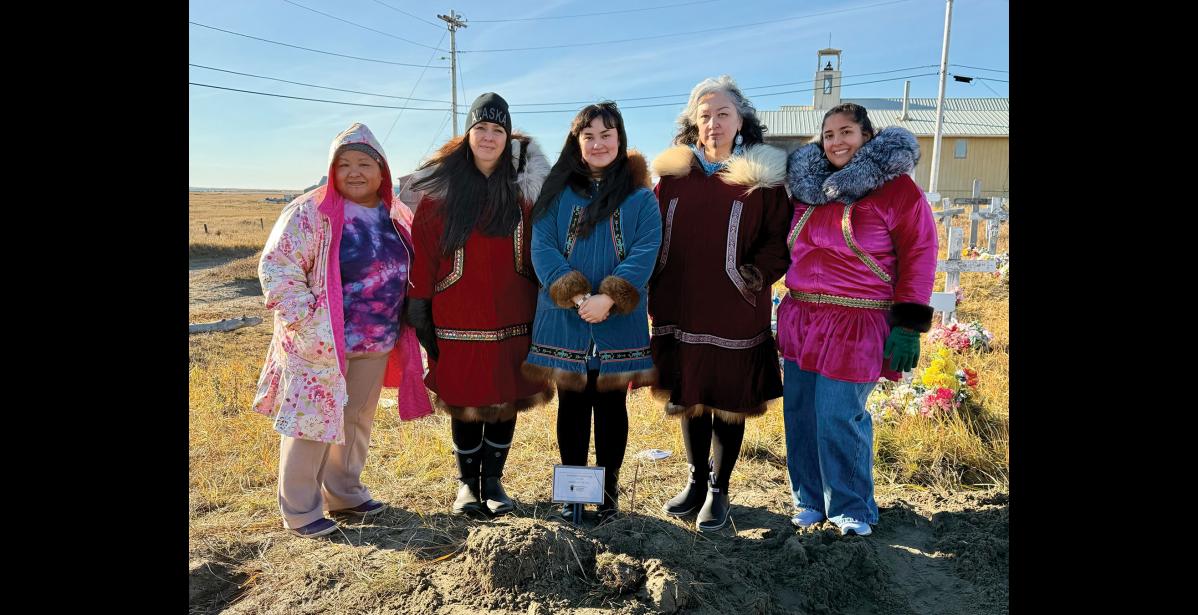
Andrew grew up in Anchorage but has family ties to Shishmaref. Bringing Tummassak home will be the first time she visits Shishmaref. “Not only is she bringing me home, I'm also bringing her home, which is just reciprocal,” she said.
Edward Angalook
Edward Angalook is the other child returning home to the region. Amber Cunningham of Unalakleet first learned about a child taken from Unalakleet when she was in Anchorage earlier this year. She reached out to Emily Edenshaw, who was heading the effort to bring Angalook’s body home, and found that the child was Edward Angalook, younger brother of Charlie Antisarlook, Cunningham’s uncle from generations back. Antisarlook was married to Sinrock Mary, reindeer herder and at one point, one of the wealthiest women in Alaska.
Edward was taken to Carlisle from the orphanage in Golovin when he was 18. His older brothers were many years older than him.
Cunningham found mentions of Edward in the journals from the Golovin Mission school. The journals documented him helping haul wood, helping to build windows and doors. Cunningham wonders if maybe his interest in building in Golovin led in some part to his being taken to Carlisle to study carpentry. The more she researched and learned about Edward, the more Cunningham felt that he needed to come home. “He's been gone long enough. His life is worth learning about,” she said.
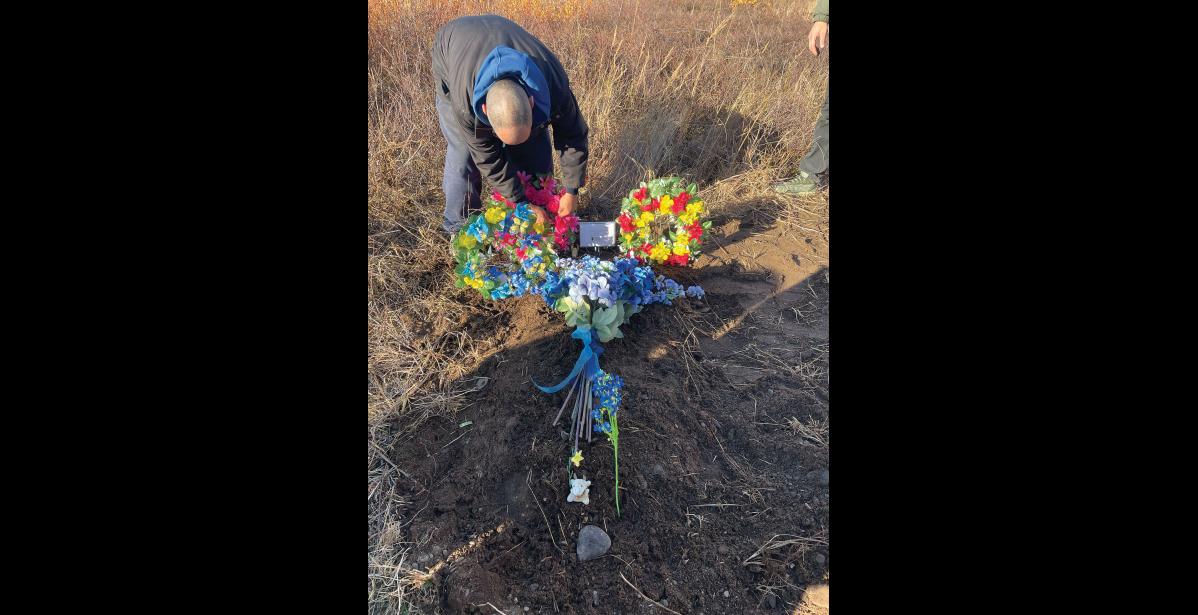
Edward’s brother, Oliver Anorak, has grandchildren still alive today, Helen and Alfred. They were present to welcome him home. Members of Edward’s family passed his name on – his sister-in-law named an adopted son Edward, and his nephew named his own son Edward. “Edward's legacy did live on, even though they never got to celebrate his life,” said Cunningham.
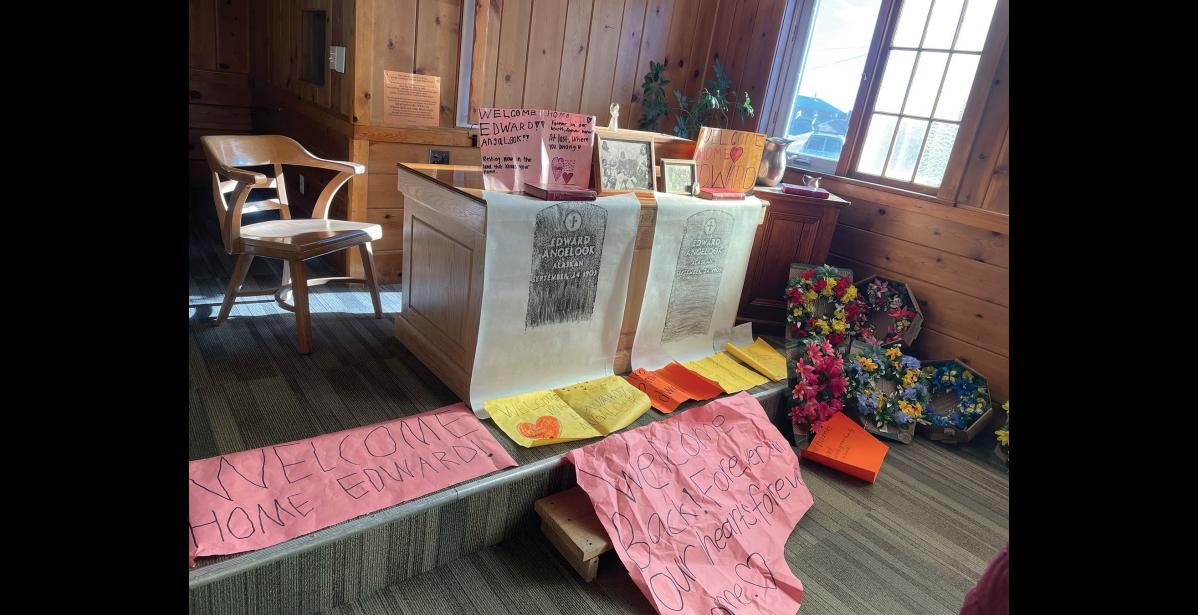
Cunningham, a teacher, brought her seventh grade class to greet the plane with Edward’s coffin when it landed in Unalakleet on Thursday. Her students made signs to welcome him home. She feels the youth should be taught their family’s history. “It's important to know how we're connected, and I try to pass it on to my kids,” she said. “And you know, now that I'm a teacher, I can pass it on to students too that are not my kids.”
Right as Edward’s coffin was being loaded onto the truck, a flock of white geese flew overhead. “It was like Mother Nature was welcoming him home with us,” said Cunningham. “I see it as Edward saying that, ‘My journey is over and that my soul is finally laid to rest.’”
To prepare her students to greet Edward’s plane, Cunningham talked to them about Carlisle and how the boarding school worked to erase the identities of students there. She told them about Edward’s family and how he was from Unalakleet, too. “They were just like, ‘But why did it take so long for him to come home? They had so many different questions,” she said.
In Unalakleet, singing and drumming was stopped back in 1915. Cunningham (who is also a member of dance group Uŋalaqłiq Iñuutchak) felt it was important to welcome Edward home with songs like the kind he might have grown up with. “All of his older brothers and his sister-in-law were reindeer herders,” she said. At his memorial service, singers and drummers performed the Reindeer Herders Love Song by Cecilia Foxy. “It was so powerful to be singing and drumming in the church with Edward.”
At the Kingikmiut Dance Festival in Wales last month, Cunningham won a raffle prize – a bone-carved pendant of a goose in flight. She wasn’t sure when she would wear it but held on to it. She put it in Edward’s coffin.
“Now that he's come home and geese flew over us, I was like, ‘Oh, this was meant for him,’” she said.