
Checking in on the price of food and fuel for the holidays
By Anna Lionas
Affordability drove voters in record numbers to the polls in the midterm elections. Ads featuring the price of eggs, how much a gallon of gas costs in rural Alaska and a call to action for cheaper housing flooded not only airwaves in Alaskan but the whole country as candidates tried to make the case that they could help.
People may feel the increased prices around holiday time more than any other as they fill their grocery carts to prepare big meals or shop for gifts for loved ones.
Federal data shows that the cost of groceries has risen almost 22 percent in the past five years, and much of that increase happened between 2022 and 2023. Though inflation rate has come down in the past two years, prices have not come down and as Economist Mike Jones explained, affordability isn’t just about the increase in pricing, it’s also about wage increases and the overall cost of everything else.
“If energy prices are increasing, but you have the same money in the bank as last year and then you have to think about buying food, there’s just less money to be spending overall,” Jones said.
A study by the American Farm Bureau estimates the average cost for a Thanksgiving dinner is up 6.3 percent this year from last. That’s just an average. Jones said inflation rates are usually 1 percent higher in Anchorage, which means it’s even higher in rural Alaska.
There are many reasons why food prices are up, and it’s not the same for every product.
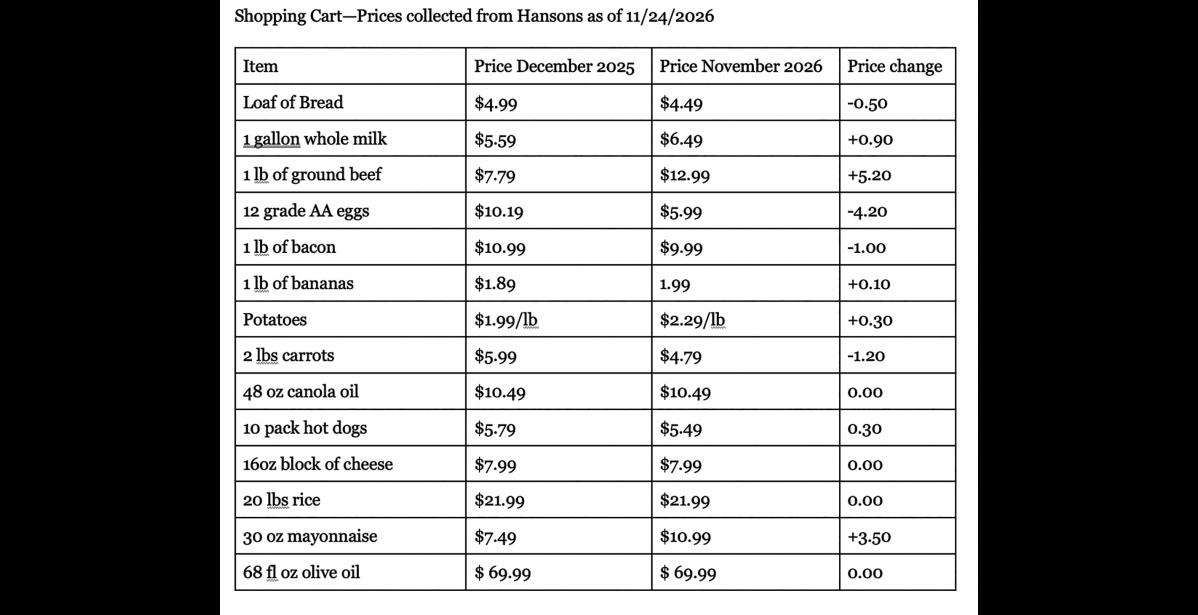
People may have noticed increased beef prices. In Nome, one pound of ground beef cost $12.99 today when it was $7.79 last December. That sharp increase is largely due to fewer cattle herds in the U.S., smaller than it’s been in 75 years. Beef prices are up 3 percent this year, but they went up 11.6 percent last year, Jones said.
Eggs prices are also vulnerable to outside factors. The huge spike in price of eggs last year was due to an outbreak of avian influenza that killed off many egg-producing birds, and as supply went down, the demand hit buyers right in their pockets.
The increase in fuel costs due to the war in Iran is most likely to impact produce, Jones said. Bypass mail is priced by weight and since 2020, the rate has increased about 56 percent. It also costs more to ship produce because it needs to be held at certain temperatures throughout the process of being moved.
Tariffs on goods mostly impact items like electronics and car parts. “Many people don’t think of steel and aluminum and timber when they’re buying gifts and things but those items being higher prices can push into general inflation because the operating costs for companies are higher,” Jones said.
About 5.8 percent of items being bought by Alaskans come from a different country, that’s called the import share consumption. Alaska’s percentage is much lower than other states like California at 13.8 percent or New Jersey at 12.7 percent.
Jones said that overall the conversation about affordability has moved from tariffs to high fuel prices and how that touches people’s lives from the cost to heat a home to what it takes to fill up at the tank.
In Nome, the Nome Community Center is hosting a Thanksgiving Meal open and free to all, from 12 p.m. to 2 p.m. at the Nome Elementary School.