
Barn Swallow––nesting success at Gambell spotlights a regional rarity
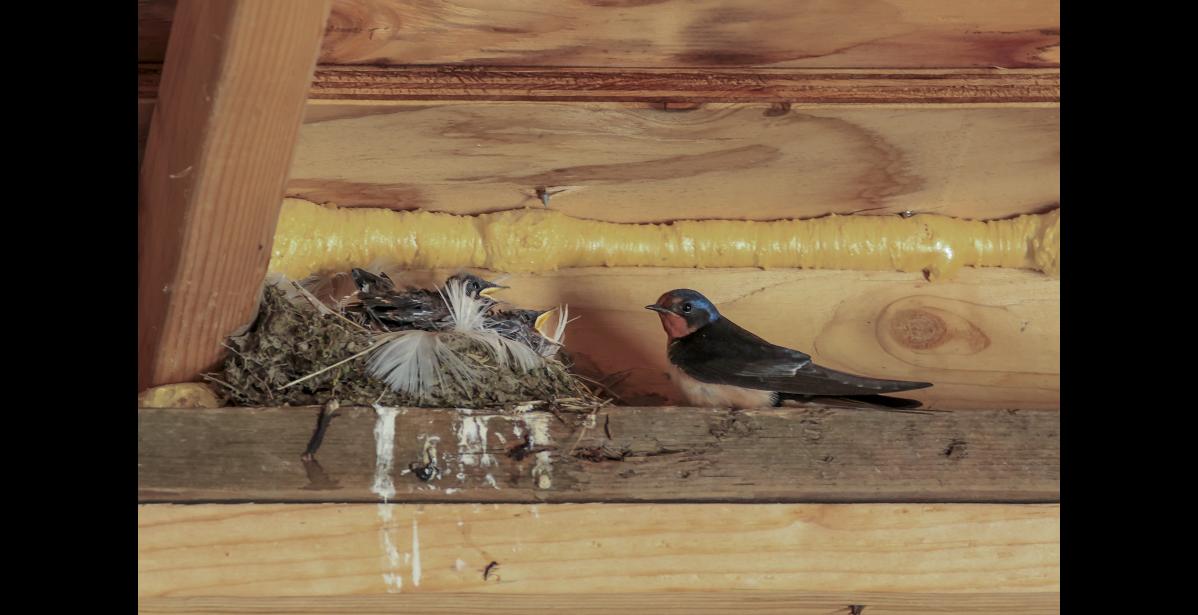
Barn swallows are the world’s most widespread and abundant swallow, but here in the Bering Strait region they are a rarity. Recent photos on eBird showing a clutch of bright-eyed, soon-to-fledge barn swallow nestlings in a Gambell shed, sparked my curiosity about this very interesting bird.
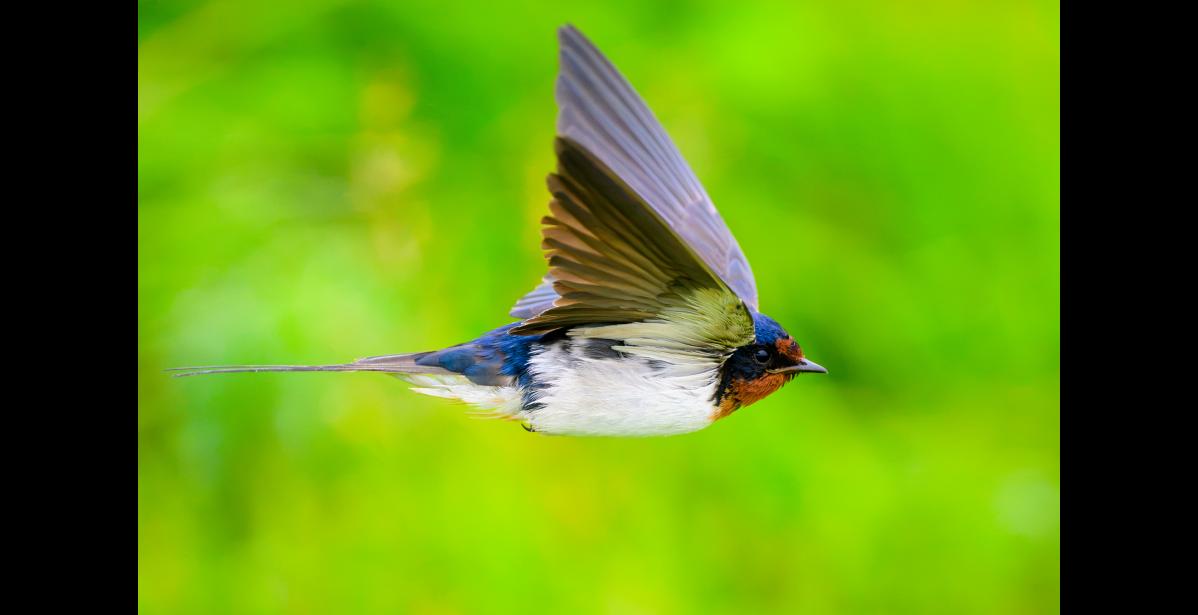
These graceful, fork-tailed swallows with flowing outer tail feathers breed throughout much of the Northern Hemisphere and overwinter widely across the Southern Hemisphere.
Historically, barn swallows nested in shallow caves and cliff crevices. Over time, populations shifted to nesting on or in manmade structures—so successfully that now it is rare to find their nests in natural settings.
In Europe, barn swallow nests have been associated with human construction for more than 2,000 years. In North America, these swallows occupied Native American habitations before European settlement, and by the mid 1900s they rarely used natural features for nesting.
The shift from natural to manmade nest sites enabled barn swallows to expand their breeding range into areas that lacked cliffs and caves, and the average size of nesting colonies increased.
Barn swallows nest in southeast and south-central Alaska. Historically, their breeding range in Alaska was more extensive, but today they are seldom seen in other parts of the state.
In Kessel’s 1989 publication “Birds of the Seward Peninsula, Alaska,” only six documented sightings of barn swallows on the Seward Peninsula and King and Sledge Islands were reported.
Though still rare, since 2015, barn swallow sightings on the Seward Peninsula have been reported on eBird in all but 2017 and 2020. Multiple sightings in some years, pairs, nesting attempts and the first successful nesting of Eurasian barn swallows in North America (2016, in Nome) have all been documented.
At Gambell on St. Lawrence Island, barn swallows are also seen rarely, most often in late spring. Two pairs are known to have fledged young there, including those recently documented by Gambell nurse practitioner Riley Wyna, whose eBird photos inspired this article.
At least six subspecies of barn swallows are recognized worldwide. Subspecies are identified by coloration, extent of the breast band, length of tail streamers and genetic differences, but these features can be difficult to distinguish.
On the Seward Peninsula North America’s only regularly occurring subspecies, which has cinnamon-colored underparts, is seen most often.
At Gambell, Eurasian subspecies are most frequently observed, including two pairs that successfully nested there—one of which, along with its three fledglings, was still winging around the outskirts of Gambell in pursuit of insects as of September 6.
Barn swallows nest near open habitat for aerial foraging, where structures or cliffs offer sites for nest placement, and mud is available for nest building.
Together, the pair builds a nest cup, often under eves or on rafters or crossbeams inside an open building, as the Gambell pair did. They collect mud in their bills, and mix it with grass to make pellets, which are formed into a cup. Grass and feathers line the nest.
Both parents incubate but the female does more, and only she broods the nearly naked hatchlings. The chicks stay in the nest for 18 to 23 days and are fed by both parents.
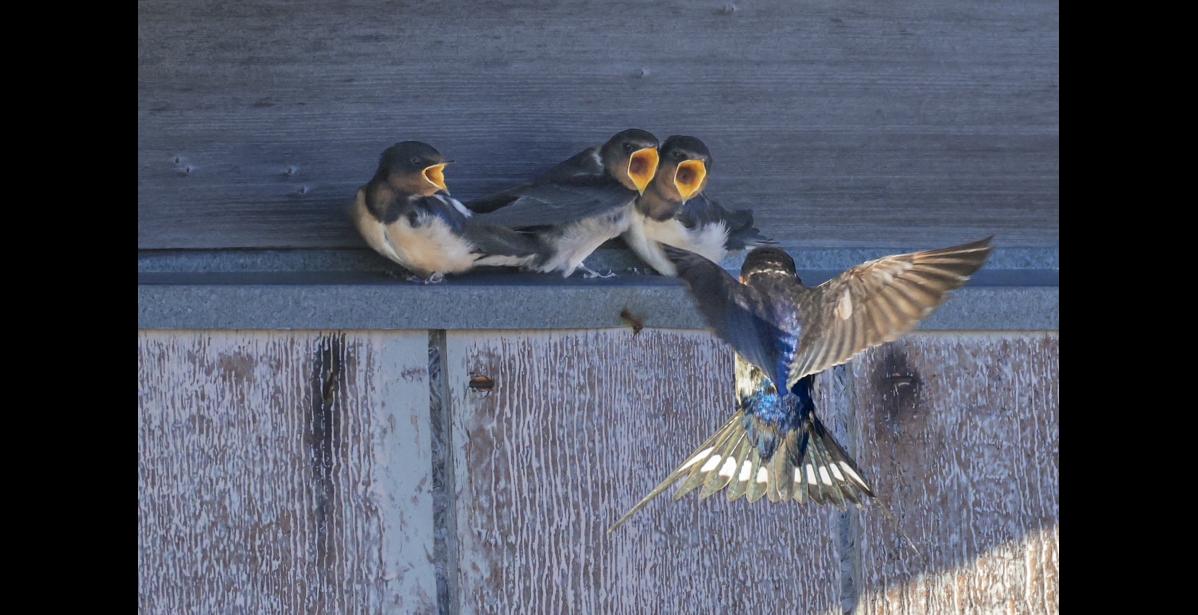
Fledglings stay close to the nest site for several days, where the family may sleep at night. At first the fledglings are fed while perched, then as they gain strength and agility on the wing, food transfers happen quickly as parents and young pass in midair. Family groups may stay together for about two weeks after fledging, then the independent juveniles disperse widely.
Barn swallows feed almost entirely on the wing, flying low over the ground or water with fluid wingbeats, snatching flying insects as they go. In cold weather they will pick sluggish flies off the sides of buildings or pick up dead insects from the ground.
Flies of all sorts are the barn swallow’s mainstay. Beetles, bees, wasps, moths, butterflies and other flying insects are also on their menu. Usually, large single insects are targeted, rather than swarms of small prey. Grit, small pebbles or egg shells are eaten, which may help digest insects or add calcium to their diet.
By flying lower than other swallows, even hugging the ground or water, they may be able to find more food during cold snaps than higher flying insectivores. Anyone who picks berries knows there are a lot more insects close to the ground than above!
The barn swallow’s streaming outer tail feathers give them extra maneuverability to make sharp turns and abrupt changes in altitude in pursuit of insects.
Barn swallows are long-distance migrants that cross continents twice each year between breeding and wintering areas. Migration spans several months each way and is done mainly in daylight, which allows them to hunt aerial insects opportunistically along the way.
The American subspecies overwinters in Central and South America. The subspecies of Gambell’s Eurasian barn swallows is uncertain, but soon they will likely begin long journeys towards Australasia or Africa.
The barn swallow’s association with humans has benefited the species by providing manmade structures for nesting, which resulted in population growth and range expansion.
However, as global insect populations decline, so too do aerial insectivorous bird species, including the barn swallow. North American breeding bird surveys showed a 25 percent decline in barn swallow numbers between 1966 and 2019.
Barn swallows are still widespread and abundant, and generally people enjoy having these graceful, insect-eating birds in their midst. When they appear, they are certainly a delightful addition to our avian cast of characters in this region.
In some cultures, barn swallows are thought to bring good luck if they nest on one’s property. Hopefully that will be the case for the kind couple in Gambell who made sure the nesting swallows were not disturbed in their storage shed.